For nearly two decades, Juno Download occupied a unique place in electronic music culture.
It wasn’t the flashiest platform. It didn’t dominate headlines like Spotify or Beatport. Yet for countless DJs, producers, collectors and underground music fans, it served as one of the internet’s most reliable destinations for discovering and purchasing dance music.
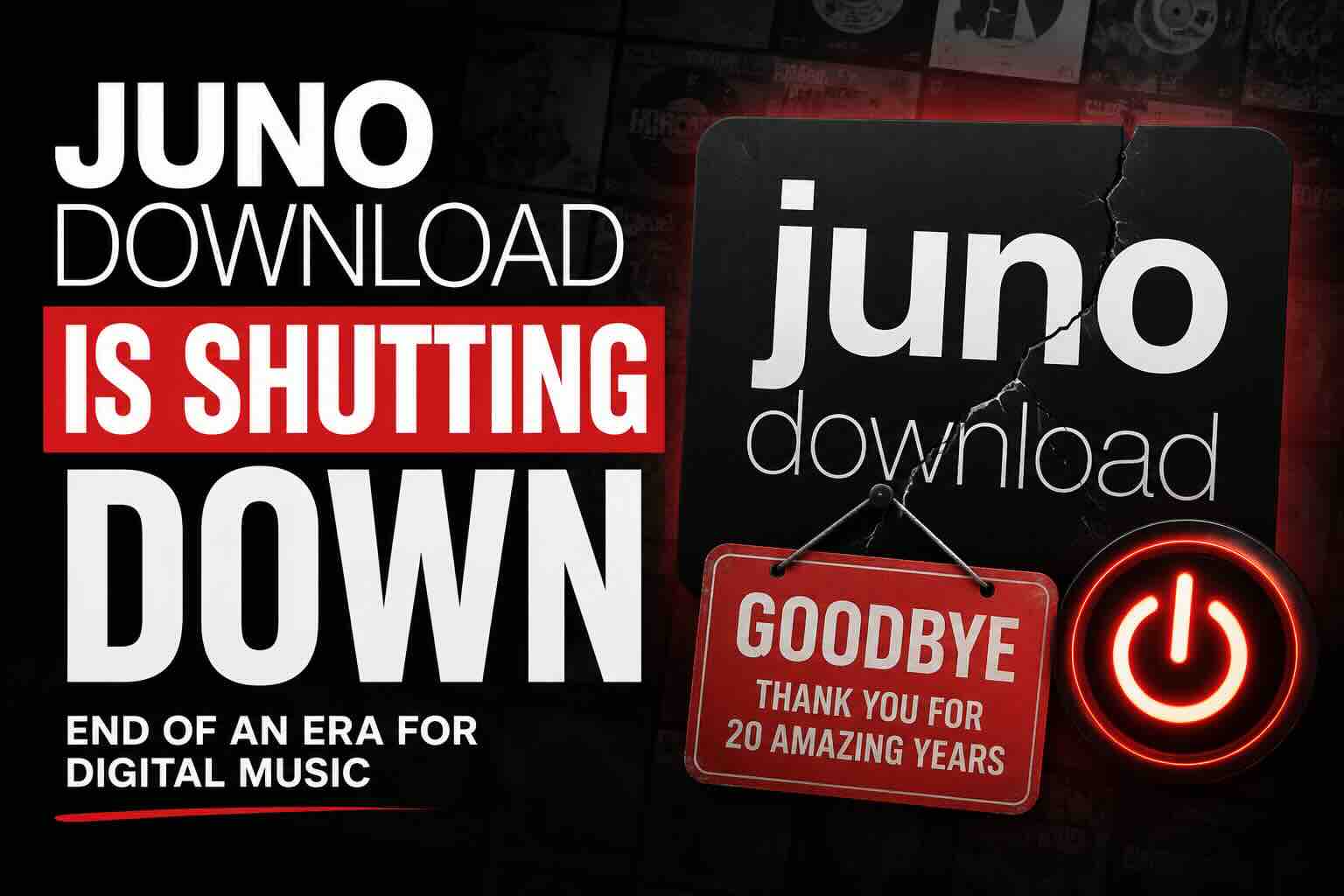
Now, that chapter has officially come to an end.
Visitors to Juno Download are greeted by a farewell message confirming the platform’s closure:
“It’s been our privilege to share some of the most incredible music from the most amazing artists, but we’re sorry to say, that the time has come to say goodbye.”
The statement points users toward alternative download stores including Beatport, Traxsource, Mixupload and Volumo, but the message is clear: one of electronic music’s longest-running digital institutions has signed off.
More Than Just Another Download Store
To understand why this matters, it’s important to remember what Juno Download represented.
When the platform launched in 2006, dance music was experiencing a major technological shift. Vinyl was still king in many DJ booths, but digital DJing was rapidly gaining momentum. As software like Traktor and Serato evolved, DJs needed reliable sources for high-quality digital files.
Juno Download arrived at exactly the right moment.
The store built a reputation for offering an enormous catalog spanning house, techno, drum & bass, trance, garage, breaks, disco and countless niche subgenres. It became known as a place where underground releases could sit alongside chart-topping club records.
For many DJs, digging through Juno Download felt closer to crate-digging than shopping.
The Streaming Problem
The closure also highlights a reality the music industry has been facing for years.
Music ownership is no longer the norm.
Streaming services have transformed consumer behavior, making monthly subscriptions more attractive than purchasing individual tracks. For casual listeners, the convenience is undeniable. Millions of songs are available instantly without the need to build a personal collection.
But download stores like Juno Download were never built for casual listeners.
Their core audience consisted of DJs and dedicated music fans who valued ownership, audio quality and permanent access to their collections.
Even within that audience, habits have changed. Streaming has become increasingly integrated into DJ software, while artists and labels have embraced direct-to-fan platforms that allow them to sell music without relying on traditional digital retailers.
The market that once supported multiple major download stores has steadily become smaller.
A Sign of Industry Consolidation
Juno Download’s exit leaves fewer major players in the digital download space.
Beatport remains the dominant platform for electronic music downloads, while Traxsource continues to serve house music and underground dance communities. At the same time, Bandcamp has become a preferred destination for independent artists seeking closer relationships with fans.
The result is an increasingly consolidated ecosystem where a handful of platforms control a large portion of digital music sales.
That reality raises important questions about competition, artist revenue and the future of music ownership in electronic culture.
Why DJs Are Feeling the Loss
For many DJs, the reaction to Juno Download’s closure has been emotional.
Not because it was the largest platform, but because it represented a different era of dance music discovery.
Before algorithms began recommending every track, many DJs spent hours browsing labels, genres and release charts. Finding music required patience, curiosity and a willingness to dig deeper than the obvious hits.
Juno Download became part of that ritual.
Its closure feels like another step away from the independent, discovery-driven culture that helped electronic music flourish online during the 2000s and early 2010s.
The End of a Chapter
The shutdown of Juno Download is ultimately about more than one company leaving the market.
It reflects the broader transformation of how music is consumed, purchased and valued in 2026.
Streaming may have won the battle for convenience, but Juno Download’s legacy serves as a reminder that ownership, curation and discovery once sat at the center of dance music culture.
For a generation of DJs, the platform was where countless sets began.
And while the music itself will continue to live on, one of electronic music’s most important digital record stores has played its final track.